


Support Healthy Cell Function: Benefits of Alpha Lipoic Acid
BioNutris / 20 Nov, 2022
Alpha lipoic acid is an organosulfur compound that is biosynthesized by all animals. It is a cofactor in many enzymes and an essential component of aerobic metabolism. One of alpha lipoic acids' most well-known biochemical uses is its role in the synthesis of pyruvate dehydrogenase complex (PDC). These roles form the basis for its use as an antioxidant, which inhibits the production of free radicals that can cause cell damage. Alpha lipoic acid has two forms known chemically as enantiomers, including R-lipoic acid (RLA) and S-lipoic acid (SLA). RLA is the biologically active form, which is widely available from many natural sources. SLA doesn't exist in nature and was first synthesized in 1952. Both forms of alpha lipoic acid are currently manufactured in commercial quantities at high levels of purity.
The most significant dietary sources of alpha lipoic acid include broccoli, kidney, liver, potatoes, spinach and yeast. It is also sold as a dietary supplement or pharmaceutical drug, depending on the country. For example, alpha lipoic acid is primarily sold as an antioxidant in the United States. Its most common use in Japan is an energy and weight-loss supplement. In the cells of the body, alpha lipoic acid is converted into dihydrolipoic acid. Alpha-lipoic acid is not the same as alpha linolenic acid, which is an omega-3 fatty acid. There is confusion between alpha-lipoic acid and alpa linolenic acid because both are sometimes abbreviated ALA. Alpha-lipoic acid is also sometimes called lipoic acid.
Uses of Alpha Lipoic Acid
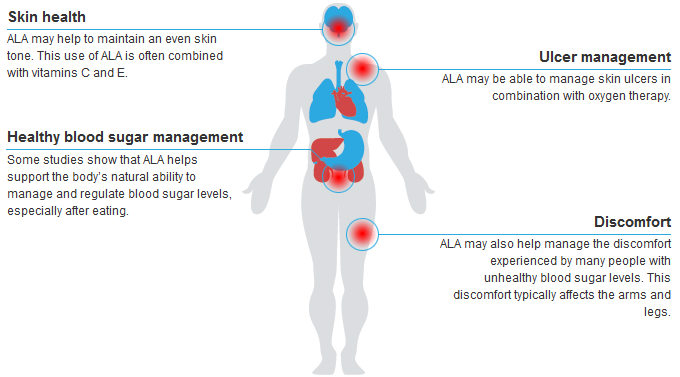
Alpha lipoic acid's antioxidant properties provide it with many benefits. ALA is most often used for conditions relating to unhealthy blood sugar levels. The support of skin health and management of ulcers are also common reasons for taking ALA. It also helps support metabolic syndrome as well as supporting a healthy immune system.
Signs You May Need Alpha Lipoic Acid
The most common reason for taking alpha lipoic acid is pain in the arms and legs, known medically as peripheral neuropathy. This condition can cause discomfort in the extremities, typically a burning or tingling sensation. These nerve-related signs may also include numbness. Additional signs that you may benefit from alpha lipoic acid include age-related conditions and it may help improve absentmindedness and maintaining memory recall. This supplement crosses the blood-brain barrier, meaning that it enters the brain easily. Its antioxidant properties allow alpha lipoic acid to support the body's natural ability to manage free radical activity. Because alpha-lipoic acid can pass easily into the brain, it may also help support the health of the brain and nerve tissue. Unhealthy blood sugar levels as well as slow healing sores are other strong indicators that you may benefit from ALA supplements.
Lipoic acid is a cofactor for five enzymes or classes of enzymes: pyruvate dehydrogenase, a-ketoglutarate dehydrogenase, the glycine cleavage system, branched chain keto acid dehydrogenase, and the alpha-oxo(keto)adipate dehydrogenase. The first two are critical to the citric acid cycle. The GCS regulates glycine concentrations
BioNutris Admin Creative Copywriter
 BioNutris Admin


Comments(26)
SENSITIVE TO ENVIROMENT
Our policies and practices are environmentally friendly with focus on sustainability and conservation.
QUALITY AND SAFETY
Based on strict Canadian standards. All our products must be scientifically quantified before being introduced to the Market place for general use.